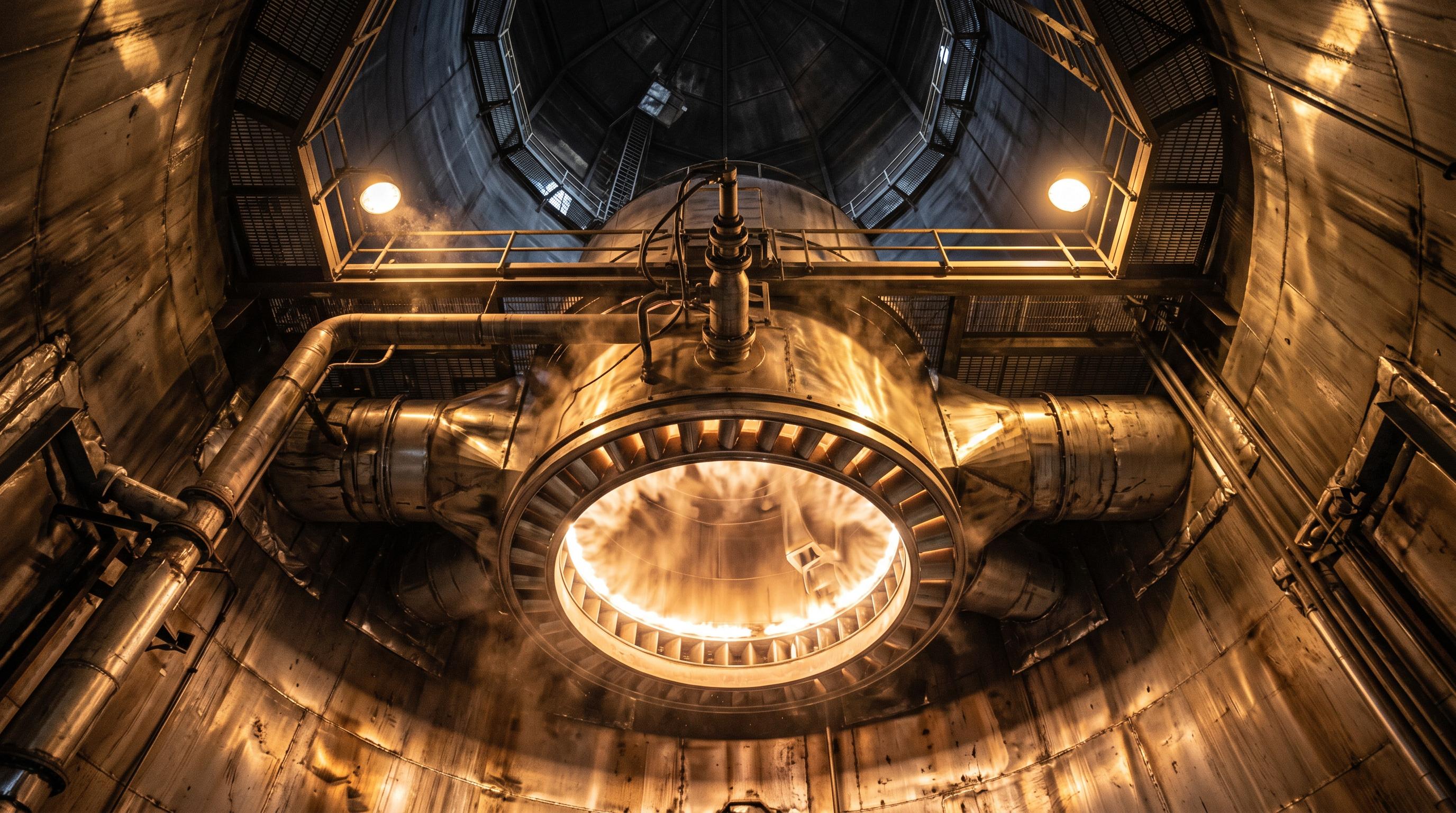
Process
The Spray Drying Process
Counter-current spray-drying converts atomized slurry into free-flowing base powder in a single pass.
Six stages from slurry to silo
Complete guide to detergent powder manufacturing — from slurry preparation to final powder handling
- 01
Raw Material Dosing
Weighing & metering systems precisely measure surfactants, builders, fillers, and additives.
- 02
Slurry Preparation
High-shear mixing tanks combine solids with viscous liquid binders to form homogeneous slurry.
- 03
Atomization
High-pressure spraying via swirl jet nozzles at 40–50 bar atomizes slurry into fine droplets.
- 04
Spray Drying
Counter-current hot air stream drives evaporation & agglomeration inside the drying tower.
- 05
Separation & Collection
Cyclone separators and wet/dry dedusting systems recover powder from the exhaust air stream.
- 06
Post-Blending & Storage
Cooling, enzyme additive dosing, perfume blending, and silo storage for final packaging.
Tower diagram & design parameters
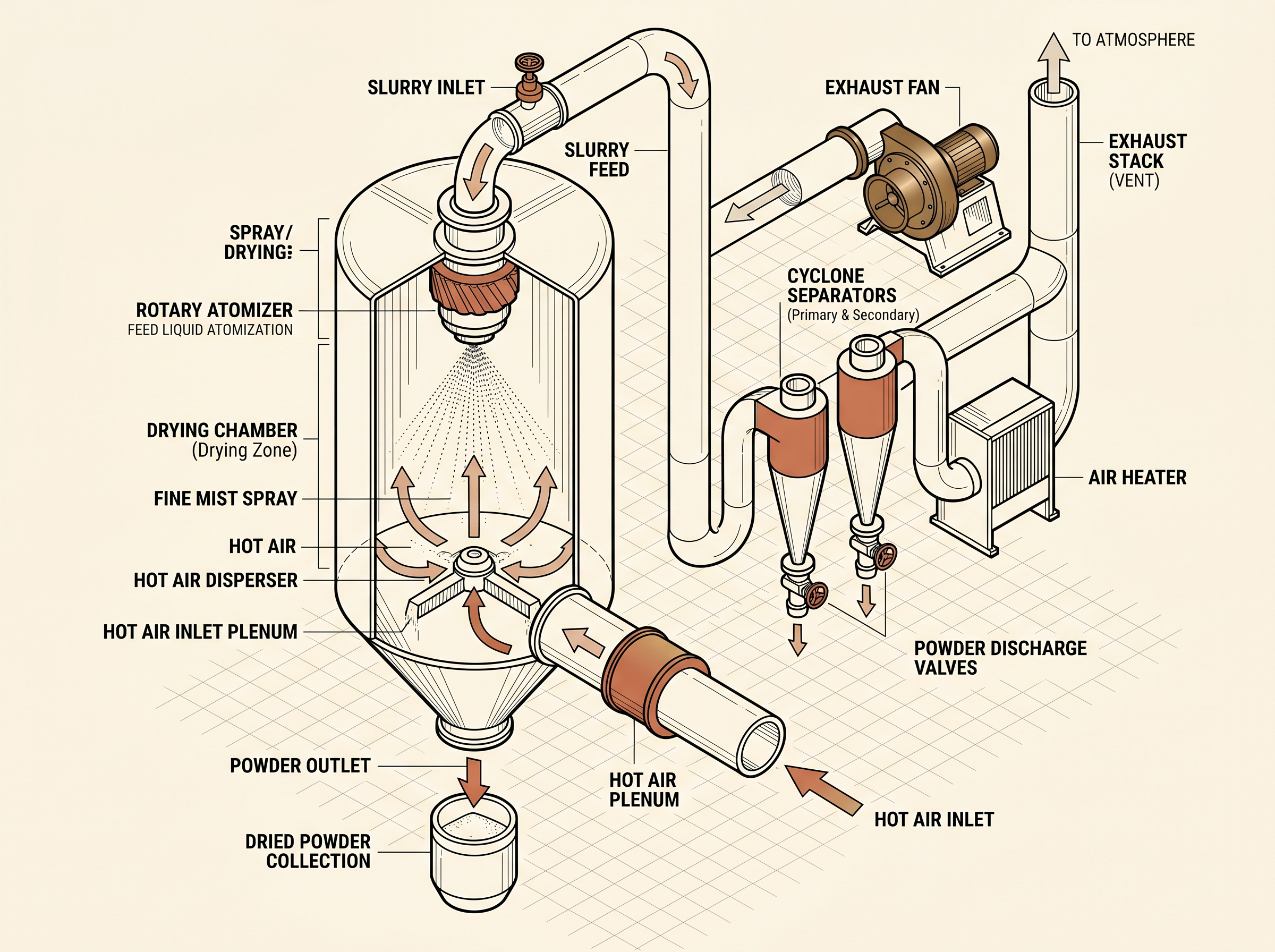
- Tower diameter
- 5 m · 7 m · 9 m (standard)
- Production capacity
- ≈ 15 / 30 / 50 tph base powder
- Disengaged height
- ≥ 3 m
- Drying height
- ≥ 5 m
- Plenum ring angle
- 20°
- Hip section
- 0.44 D · angle 60–70°
- Superficial tower velocity
- 0.5–1 m/s
- Atomization pressure
- 40–50 bar
- Nozzle swirl angle
- 55–70°
- Tower superficial air velocity (NTP)
- ≈ 10 m/s
Operation sequences
Start up
- 01Close all dampers.
- 02Start exhaust fans.
- 03Open wet cyclone water supply.
- 04Start base conveyor.
- 05Start air inlet fan.
- 06Open fuel valve and ignite the burning furnace.
- 07Open spray jets gradually.
- 08Raise inlet temperature in steps to set point.
Steady state
- 01Inlet temperature controlled by fuel flow rate.
- 02Underpressure controlled by exhaust fan speed or damper position.
- 03Powder moisture controlled by adjusting air inlet flow rate.
- 04Bulk density controlled by slurry de-aeration / re-aeration.
- 05Continuously monitor inlet/outlet temperature, ΔP across cyclones, slurry feed pressure.
Shut down
- 01Divert slurry away from nozzles.
- 02Shut off fuel to the burning furnace.
- 03Shut off air inlet fan.
- 04Shut off air outlet fan when tower temperature drops below 50°C.
- 05Stop conveyors and isolate.
Process control loops
| Parameter | Controlled by | Target |
|---|---|---|
| Inlet temperature | Fuel flow rate to the burning furnace | Set point ± 5 °C |
| Underpressure | Exhaust fan speed or damper position | -20 to -50 Pa |
| Powder moisture | Air inlet flow rate | 8 – 12 % |
| Bulk density | Slurry de-aeration / re-aeration | Recipe target ± 30 g/L |
Plant process sections
Raw material dosing
- · Powder conveyors
- · Liquid valves
- · Weighing systems
Slurry preparation
- · Mixer
- · Slurry tank
- · Pumps
- · VFD drives
Spray drying tower
- · Burner
- · Combustion fan
- · Inlet / exhaust fans
- · Temperature & pressure control
Post-blending
- · Powder mixing
- · Additive dosing
Liquid storage
- · Tank farm
- · Feed pumps
ESD safety system
- · Emergency shutdown with temperature and pressure switches